

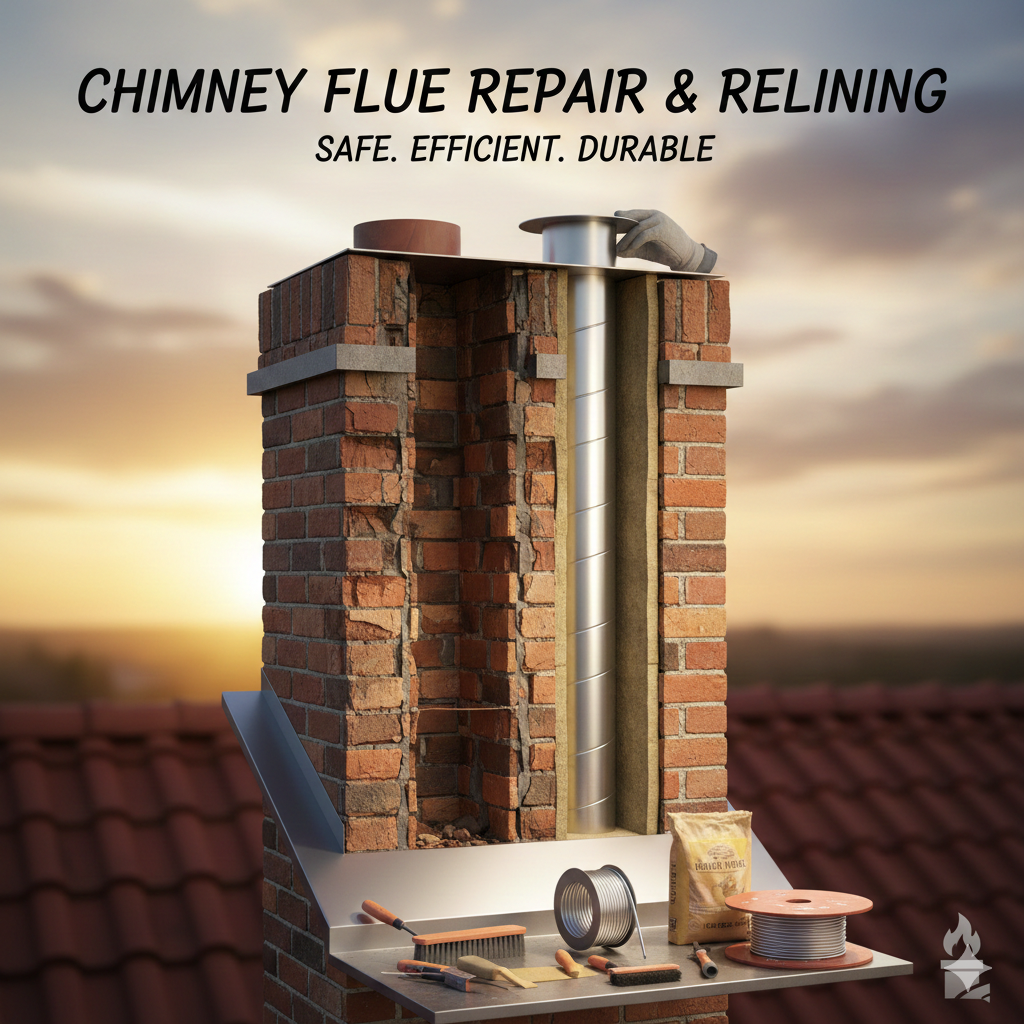
A damaged chimney flue is never just a minor issue, because it can quickly turn into a serious safety risk for your home and family. When the flue is cracked, blocked or leaking, hot gases and sparks can escape into the brickwork or loft area. This greatly raises the risk of a chimney or roof fire.
A faulty flue can also let invisible carbon monoxide seep back into your rooms instead of venting safely outside. This situation can lead to dangerous, even fatal, poisoning. Over time, leaking flue gases and moisture cause damp stains, crumbling plaster and damage to the chimney stack. You then face paying for safety repairs as well as internal redecoration.
In this guide, you will see clear safety warnings, learn the difference between chimney flue repair and full relining, and get a realistic overview of typical chimney flue repair and relining costs in the UK. You will also find out how PRBG, based in Pontypridd, supports homeowners across Pontypridd, Cardiff, Swansea, Newport, Bridgend and the wider South Wales area with professional chimney and roof repairs backed by a 10-year guarantee on major works.
What Is a Chimney Flue and Why It Matters
Safety Warnings: Signs Your Chimney Flue Is Unsafe
A chimney flue is the inner passage inside your chimney that gives smoke, hot gases and moisture a safe route out of your home. To protect the chimney itself, this passage usually has a flue liner made from clay tiles, metal or a cast-in-place concrete-style system. These liners help the chimney cope with high temperatures and corrosive fumes. As a result, the brickwork, mortar and nearby roof structure do not overheat or break down.
When your fire or appliance runs, the flue works like a vertical exhaust pipe that carries fumes upwards and out through the top of the chimney. This stops smoke and gases from spilling back into your rooms. Every open fire, wood-burning or multi-fuel stove, and gas appliance needs a sound, correctly sized flue system to draw properly. A good flue keeps combustion products away from your living spaces and helps the appliance work efficiently.
Chimney Flue Repair or Relining?
When you are deciding between chimney flue repair and full relining, the key difference is how much of the liner is damaged and how safe it is to keep using. Chimney flue repair usually means fixing localised issues, such as small cracks, damaged mortar joints between tiles, loose metal joints or damp-related problems around the top of the flue or cap. Targeted repairs work best when most of the liner is still sound and the damage sits in just a few sections, because this approach restores safe performance without replacing the whole system.
Chimney flue relining, on the other hand, involves installing a completely new liner inside the existing chimney when the old one has become badly cracked, worn, undersized or unsafe for your current appliance. Full relining is usually the safer option when there is extensive cracking, missing or loose liner tiles, long-term smoke leakage, or signs that fumes have already been escaping into the chimney structure. It is also recommended when you change or upgrade your appliance, for example adding a wood-burning stove or switching fuel type, because the existing flue may not meet modern sizing or building regulation requirements.
Common Chimney Flue Repair Methods
Professional chimney flue repairs focus on restoring the inside of the chimney so it can carry smoke and fumes safely again. Depending on the damage, a specialist may seal localised cracks, smooth and resurface the liner (parging), repair or refill defective mortar joints, or replace individual cracked flue tiles rather than the whole liner. In other cases, they may insert rigid or flexible metal liner sections to bridge worn areas, along with repointing the external mortar around the chimney stack to keep water out.
Caps, cowls and dampers at the top of the chimney work like a small roof and control system for the flue, helping to keep out rain, birds, nests and wind that can cause downdraughts and damage. A sound cap or cowl reduces rainwater running into the flue, which means less internal damp, fewer blockages and a lower risk of corrosion or frost damage to the liner.
Finally, safe chimney flue pipe connections are essential, especially for stoves and boilers that rely on strong, consistent draw. Installers check that the appliance, flue pipe and main liner are joined with the right adapters, sealed with suitable fire cement and tested for leaks, so smoke and carbon monoxide cannot escape into the room.
Chimney Flue Relining Options
In the UK, there are several chimney flue relining options, and the best choice depends on your appliance, fuel type and the condition of your existing chimney. Flexible stainless-steel liners are one of the most common solutions for older masonry chimneys, because they can bend around offsets and are available in different grades (such as 316 for lighter use and 904 for heavier, multi-fuel use). Rigid section liners made from clay, pumice or refractory concrete are another option, usually installed as interlocking sections that form a smooth, heat-resistant flue for Class 1 chimneys.
Specialist cast-in-place systems use an inflatable former and a pumped refractory concrete mix to create a new, continuous liner inside the old flue, which can strengthen the chimney as well as seal cracks and voids. For many UK homes, relining becomes necessary when fitting a new wood-burning or multi-fuel stove, when the existing flue is damaged or leaking, or when the original chimney was built before modern regulations and no longer meets current safety standards. A HETAS-registered installer can advise on the correct liner size and type for your stove, open fire or gas appliance, ensuring the system complies with UK building regulations and performs safely.
DIY Chimney Flue Repair vs Hiring a Professional
Some small chimney jobs can be tackled by confident homeowners, but most flue repairs are best left to trained specialists because they directly affect safety. Simple visual checks from ground level or at the fireplace, keeping the hearth area clear, and following the instructions on a ready-made chimney flue repair kit for very minor, accessible issues are about as far as DIY should usually go. Even then, it is important to confirm that any kit you use is suitable for your appliance and allowed under UK guidance, because an incorrect product can make things worse instead of better.
Most chimney flue repairs should not be DIY, as they involve working at height on ladders or scaffolding, handling heavy materials, and dealing with hidden structural and fire-safety risks. Without the right training and testing equipment, it is very easy to miss internal cracks, loose joints or partial blockages that could later cause a chimney fire or carbon monoxide leak. There is also the question of UK building regulations and insurance, because unregistered work on flues and liners can leave you with problems when you sell the property or try to claim after a fire.
In the UK, professional chimney flue repair contractors and HETAS-registered installers play a key role in keeping solid-fuel and biomass systems safe and compliant. These specialists can carry out CCTV inspections, smoke tests and performance checks, then repair or reline the flue and self-certify the work under a recognised competent person scheme where applicable. Using an accredited contractor means your chimney flue repairs are documented, meet current standards, and help protect your home, your family and your insurance cover.
UK Chimney Flue Repair and Relining Cost Guide
UK chimney flue repair and relining costs vary a lot between properties, so guide figures are always approximate. The table below gives simple ballpark ranges to help homeowners understand typical price levels, but for an exact quote it is always best to contact a local specialist such as PRBG.
Typical UK chimney flue repair and relining costs (guide only)
| Item / service | Typical guide range (UK) |
| Cracked chimney flue repair (including inspection and cleaning) | Often around £800–£1,200 per job, depending on damage and access. |
| Chimney flue liner repair or partial relining | Commonly from about £800 upwards, rising with height and material choice. |
| Full flue relining (standard house, stainless flexible liner) | Frequently in the region of £1,000–£2,500+ supplied and fitted. |
| Full flue relining with heavier-duty clay, pumice or concrete liners | Often from around £1,200–£3,000+ depending on property size and complexity. |
Several factors affect the final chimney flue repair cost in the UK. These include how high the chimney is, whether you need scaffolding, the length and diameter of the flue, the liner material, and any extra work such as caps, cowls, lead flashing repairs or stack repointing.
Homeowners should also budget separately for scaffolding where required, CCTV flue inspections, chimney sweeping, smoke testing, and any making-good of internal plasterwork or redecorating after the repair. For an accurate price for your property in Pontypridd or anywhere in South Wales, the safest option is to contact PRBG directly for a tailored chimney flue repair or relining quote.
Chimney Flue Repairs Near Pontypridd & South Wales
When your chimney flue needs work, choosing a local specialist in Pontypridd or the wider South Wales area usually means faster response times, easier site visits and better aftercare if anything needs adjusting later. A contractor who regularly works in Pontypridd, Cardiff, Swansea, Newport, Bridgend and nearby towns also understands local weather exposure and planning issues, so repairs and relining are designed to last in real South Wales conditions.
Many homes in this region are older stone or brick terraces, traditional semis and rural cottages, and their chimneys often have narrow, twisting flues, ageing mortar and historic alterations that need tailored repair or relining solutions rather than a one-size-fits-all approach. To find the right help, homeowners can search for phrases like “chimney flue repair Pontypridd”, “chimney flue relining South Wales” or simply “chimney and flue repair near me” to connect with trusted local experts quickly.
Maintenance Tips to Protect Your Chimney Flue
Regular maintenance is one of the easiest ways to keep your chimney flue safe and extend the life of the liner. For most UK homes, open fires and wood-burning or multi-fuel stoves should have the chimney swept at least once a year for light use, and up to twice a year or quarterly during heavy use, because this helps remove soot and tar that can overheat, catch fire and attack the flue lining. Gas and oil appliances also need periodic flue checks and sweeping, even though they usually produce less soot, as blockages or corrosion can still develop over time.
Between professional visits, homeowners can carry out simple visual checks to spot early warning signs. It helps to watch for damp patches or brown stains near the chimney breast, flaking paint or wallpaper, loose or crumbling mortar, unusual smoky or musty smells, or changes in how well your stove or fire draws, such as more smoke in the room. Rust on metal parts like the damper, water marks in the firebox, or new cracks in visible brickwork or plaster are other clues that water or fumes may be getting where they should not.
If you ever notice a visible crack, signs of smoke leaking into the room, a strong change in appliance behaviour, or a new damp or burning smell around the chimney, you should stop using the fire or stove until it has been checked. At that point, the safest step is to arrange a professional inspection, and homeowners in Pontypridd and across South Wales can contact PRBG to investigate the problem, advise on repair or relining, and make sure the chimney flue is safe before the next use.
Call to Action
If you are worried about a cracked, leaking or unsafe chimney flue, getting it checked now is far safer and usually far cheaper than waiting until a small problem turns into a major repair. PRBG is based in Pontypridd and supports homeowners right across South Wales with expert chimney and roof repairs, so your flue, stack and roof covering can all be assessed and put right in one visit.
Whether you have an older terrace in Pontypridd, a family home in Cardiff or Swansea, or a rural property exposed to South Wales weather, the team can advise on chimney flue repair, full relining and long-term protection for your home. To book a chimney safety inspection or request a tailored quote for chimney flue repairs or relining, homeowners can call PRBG today on 0333 335 6086 or send an enquiry through the PRBG website.